


College of Agriculture, Rajendranagar, Hyderabad-500 030
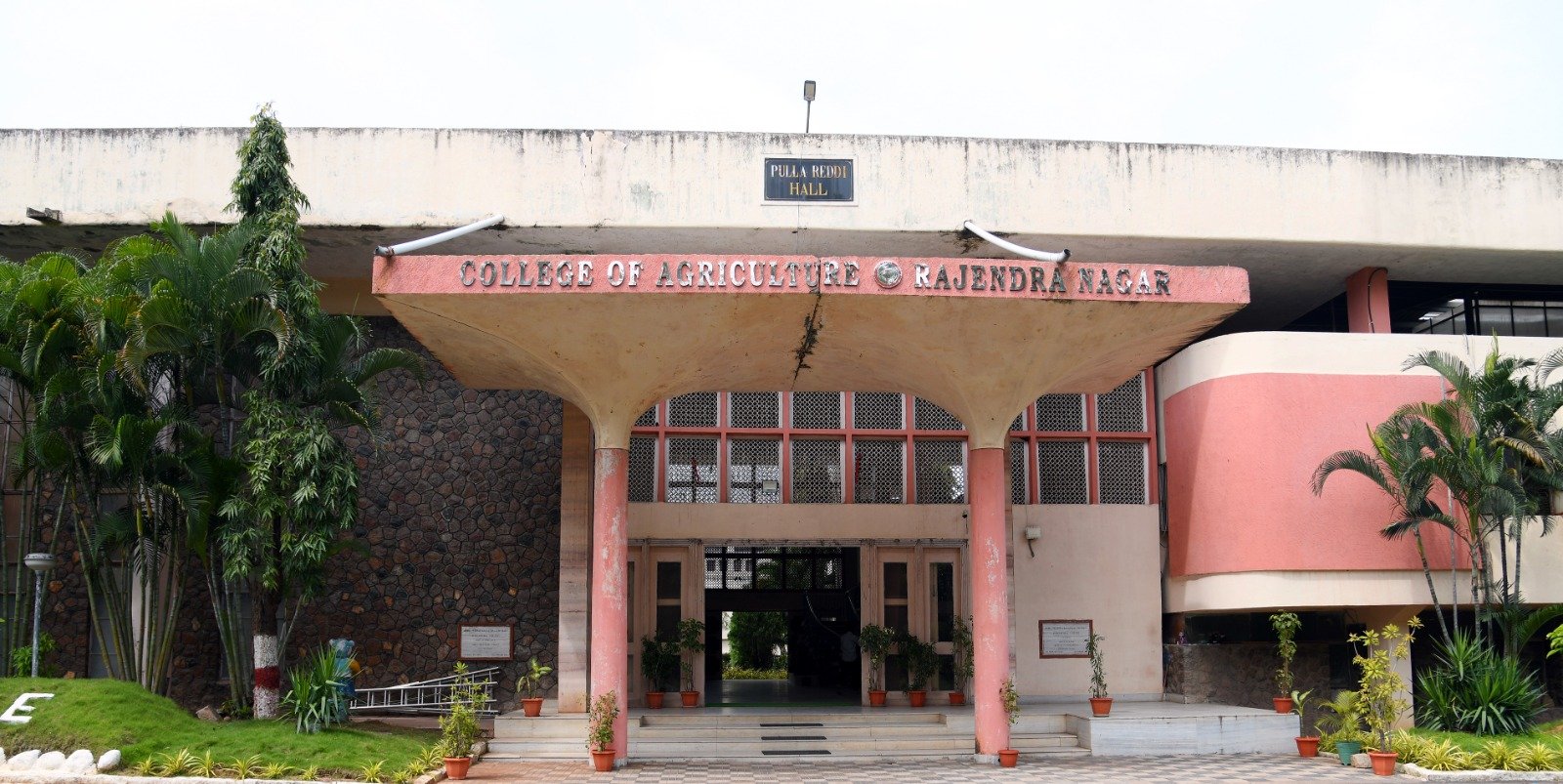
The College of Agriculture, Rajendranagar is one of the oldest and most prestigious agricultural institutions in India, with a legacy that dates back to 1946 when it was established under Osmania University. In 1964, it was integrated into the Andhra Pradesh Agricultural University (APAU), later renamed Acharya N.G. Ranga Agricultural University (ANGRAU) in 1996. With the formation of Telangana, the college became part of the Professor Jayashankar Telangana State Agricultural University (PJTSAU) in 2014, and in 2024 it was renamed as Professor Jayashankar Telangana Agricultural University (PJTAU).
Over the decades, the college has emerged as a centre of excellence in agricultural education, research, and extension, contributing significantly to human resource development and innovations in farming systems for sustainable agriculture.
Academic Programmes
The college offers a four-year B.Sc. (Hons.) Agriculture programme, originally introduced in 1964 as B.Sc. (Ag.) and restructured in 2016 in line with ICAR Fifth Dean’s Committee recommendations. Currently, the undergraduate intake stands at 382 students per year.
Postgraduate education includes M.Sc. (Ag.) across 11 disciplines (including MBA in Agri-Business Management) with 157 students, and Ph.D. programmes in seven disciplines with 54 students. The VI Dean’s Committee syllabus has been implemented for UG students admitted from 2024 onwards.
The College has been ICAR accredited for 2021–2026, reflecting its high standards in education and research.
Objectives
- To impart scientific knowledge, training, and skills to students, enabling them to become successful agri-entrepreneurs and contribute to the needs of farmers and industry.
- To conduct basic and applied research for developing innovative solutions to state-level agricultural challenges.
- To train students in disseminating sustainable agricultural technologies and extending research benefits to farming communities.
Faculty and Student Strength
The college is supported by a dedicated team of 57 faculty members, the majority being doctorates with proven expertise in teaching, research, and extension. They are assisted by 117 experienced non-teaching staff who ensure smooth academic and research operations. A Student Advisory Council actively monitors and supports the academic and personal growth of students through mentoring and counseling.
Infrastructure and Learning Resources
The campus provides a state-of-the-art learning environment with:
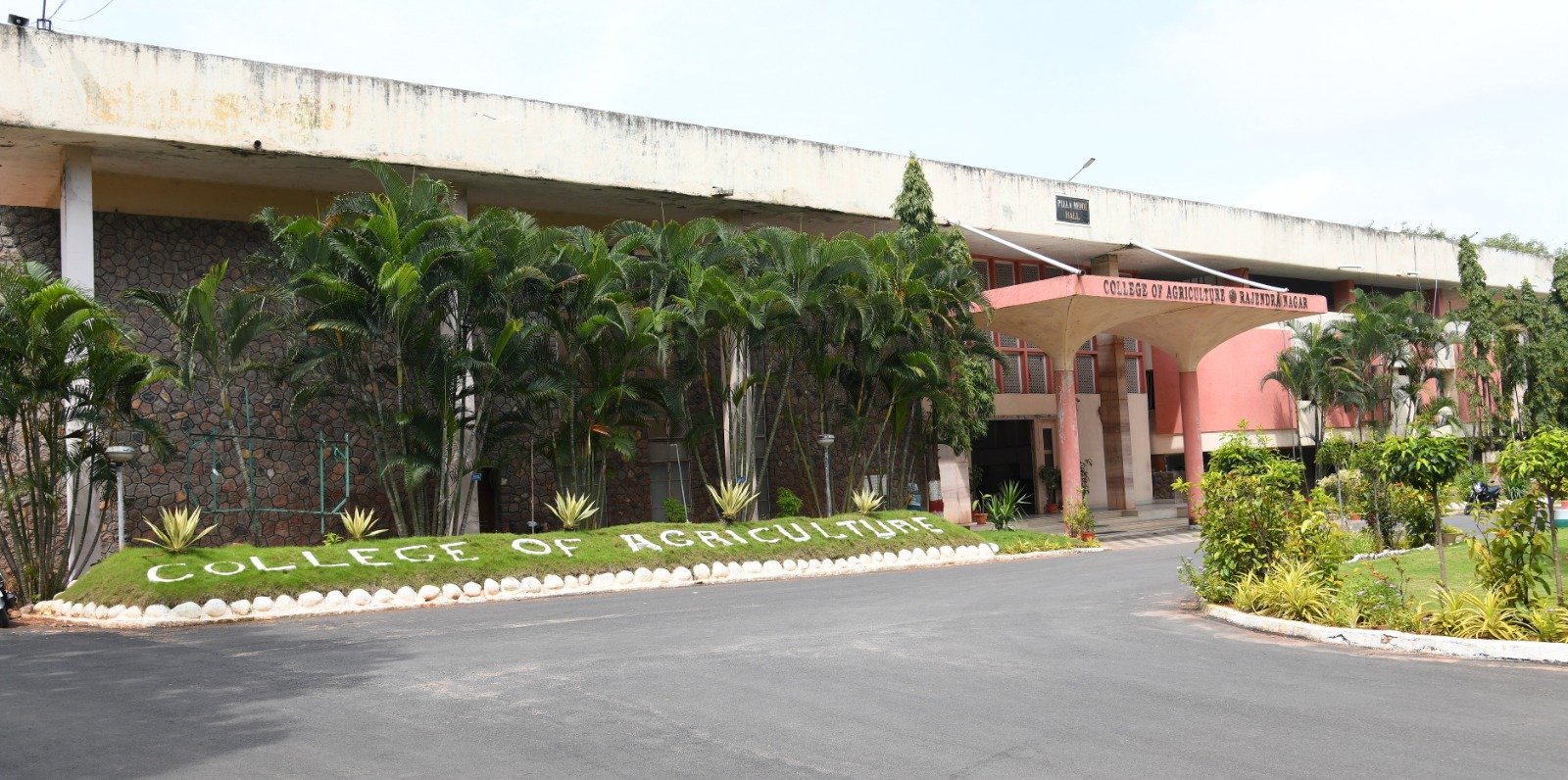
- A well-designed college building with 16 classrooms, 34 laboratories, and 5 interconnected academic blocks.
- 12 smart classrooms, a virtual classroom, AR & VR lab, and ICT-enabled seminar halls for modern teaching methodologies.
- A Knowledge Management Centre (Digital Library) with more than 2 lakh books, 26,497 back volumes, 1,380 e-books, 5,778 e-journals, and 12 online databases, fully digitized and integrated with Krishikosh.
- Specialized facilities including Central Instrumentation Cell, Modern Agricultural Information Centre, Crop Cafeteria, and Museums in Agronomy, Pathology, and Entomology.
- Wi-Fi-enabled hostels, classrooms, and research farms, ensuring seamless connectivity and exposure to modern learning tools.
- Farm facilities spanning 113.6 ha at the College Farm and 53 ha at the Student Farm for experiential learning and research.
Research and Projects
Faculty members are actively engaged in externally funded projects supported by government and national institutions, with current projects worth over ₹53.5 lakh (2024–25). Revolving fund projects in Agricultural Microbiology, Bioenergy, Soil Science, and Farm Management further strengthen practical learning.
Research is closely integrated with teaching and student participation, ensuring exposure to national and international standards through collaborations with institutes such as ICAR-IIRR, CRIDA, IBT, and pesticide residue laboratories.
Student Development and Outreach
- Placement Cell: Organizes career counselling, soft skills training, and industry collaborations. Recent recruiters include Godrej Agrovet, Syngenta, ITC, Mahyco, Coromandel Fertilizers, and Gharda Chemicals.
- Higher Education Opportunities: A record number of students secure admissions through ICAR-AIEEA to reputed institutions across India every year.
- Extension and Outreach: Students actively participate in RAWEP (Rural Agricultural Work Experience Programme) and Experiential Learning Units (vermicomposting, mushroom cultivation, biofertilizers, commercial vegetable production, etc.), directly interacting with farmers and rural communities.
- Village Adoption Programme: Students and faculty adopt villages to conduct soil testing, pest diagnostics, technology demonstrations, and input distribution, bridging science and field application.
- NSS and NCC Units: Foster community service, leadership, and discipline through national events, rallies, plantation drives, Swachh Bharat activities, and election duties.
Student Achievements and Recognitions
Students regularly excel in national-level competitions, securing gold medals, best thesis awards, poster presentations, and cultural accolades. The college teams have won overall championships in intercollegiate games and cultural meets, reflecting a balance of academics, sports, and personality development.
Why Choose Us ?
- Legacy of over 75 years in agricultural education and research.
- ICAR-accredited (2021–2026) institution with nationally recognized programmes.
- Blend of traditional agricultural expertise with modern ICT, AI, remote sensing, and drone technologies.
- Strong focus on student employability, entrepreneurship, and higher education.
- Hands-on training, village adoption programmes, and experiential learning units bridging classroom learning with real-world agriculture.
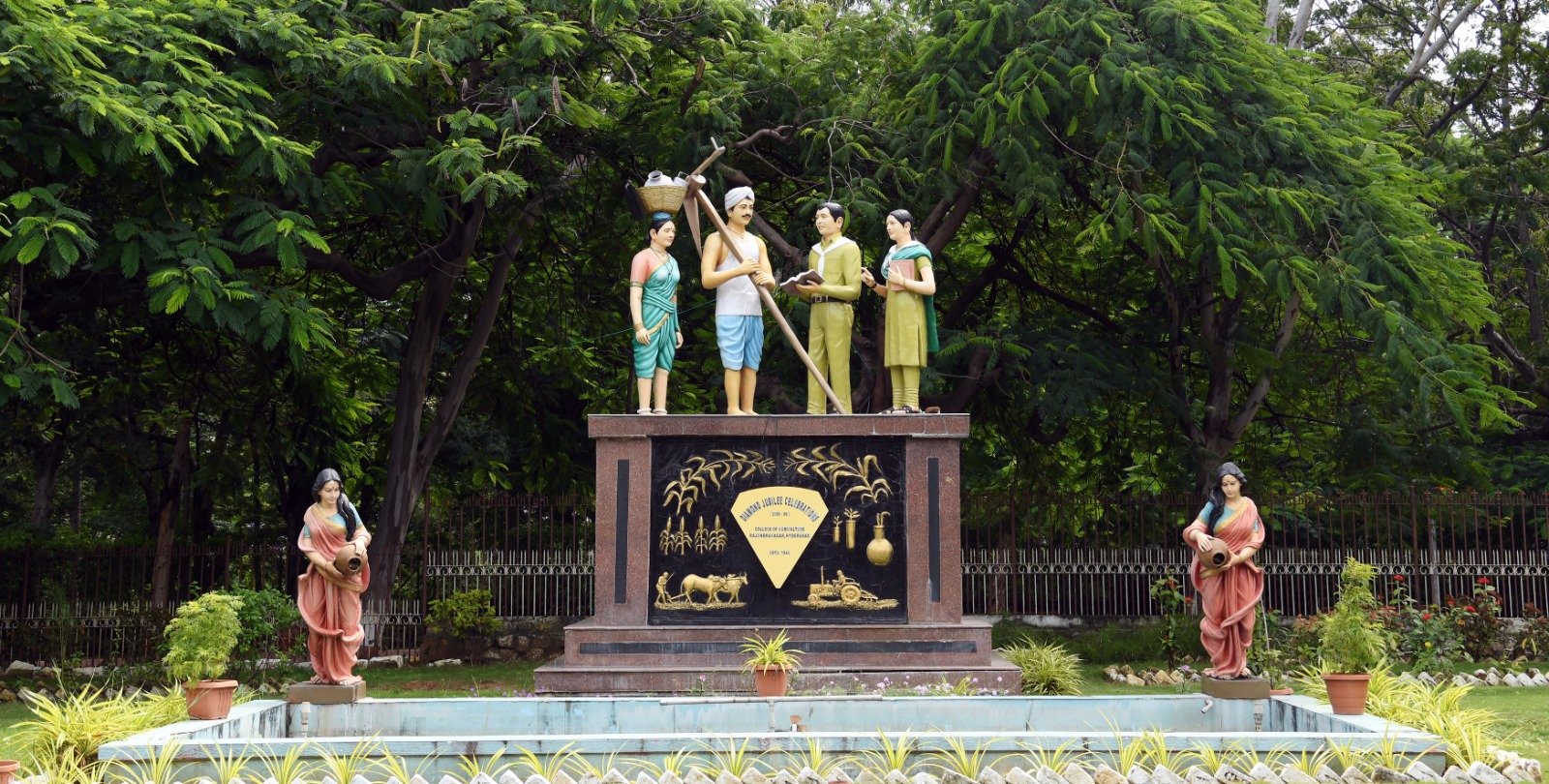
At the College of Agriculture, Rajendranagar, students are nurtured not only as future scientists and entrepreneurs but also as leaders committed to sustainable agriculture and rural development.
About Associate Dean, Dr. M. Goverdhan
He began his career at Agricultural Research Station in Southern Telangana Zone, where he actively coordinated multi-locational projects at Adilabad, Bora, and Parigi in collaboration with Central Government programs. He subsequently held the position of Associate Director of Research, Southern Telangana Zone, and later served as Senior Professor and Head, AICRP on Integrated Farming Systems (IFS).
With over 35 years of dedicated service in agricultural research, education, and extension, he has made significant contributions to farming systems research and sustainable agricultural development.
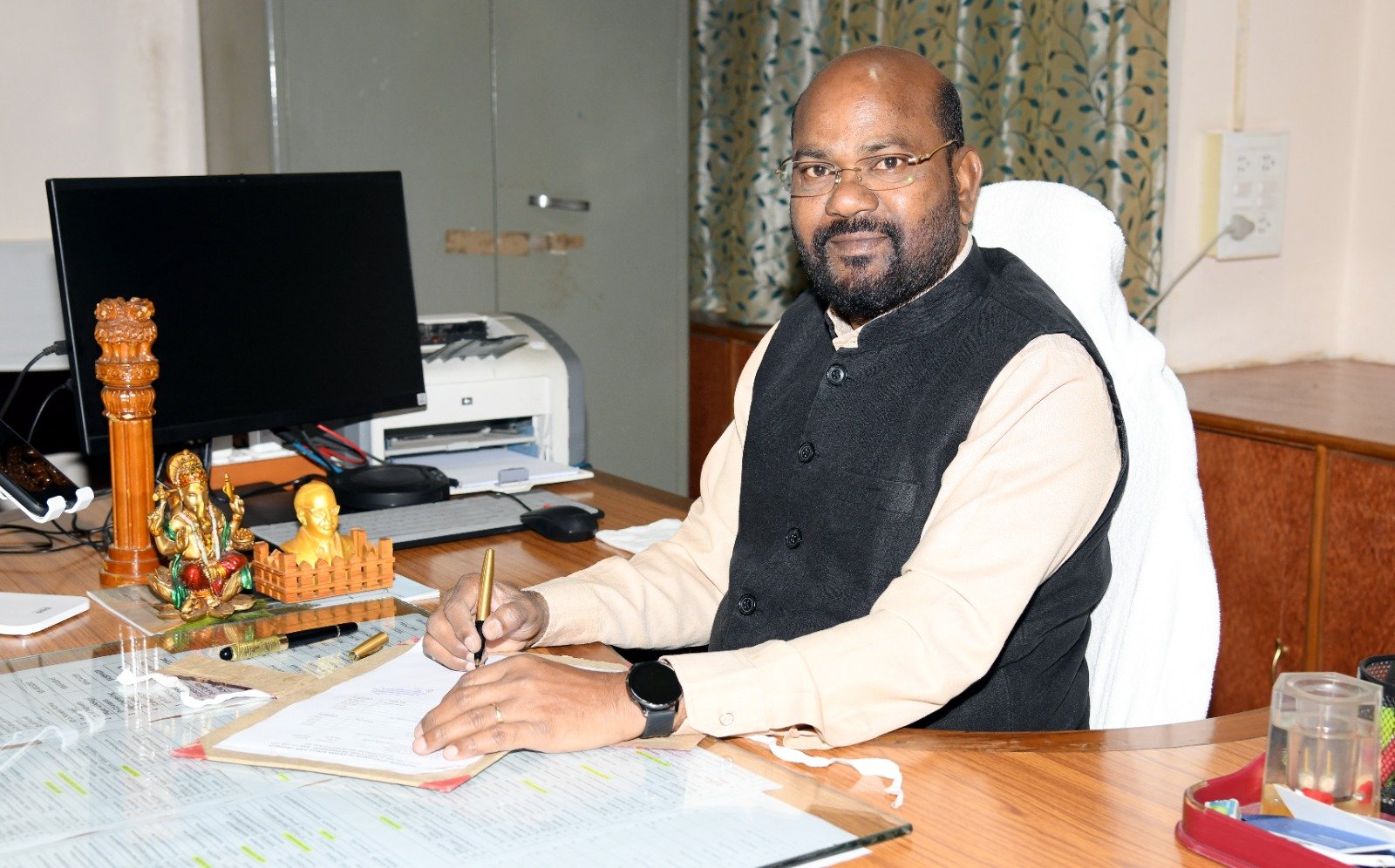
He has standardized a range of technologies for dryland and rice-based farming, focusing on eco-friendly and resource-conserving practices. His work has been instrumental in developing and refining protocols for paddy cultivation, as well as in promoting eco-friendly crop rotations, diversified farming systems, and climate-resilient agriculture.
He has made notable contributions to Integrated Farming Systems (IFS) research through the development of 32 location-specific, profitable, scalable, and sustainable models suited to the diverse agro-ecologies of Telangana. These models have been formally recognized for their financial viability, with NABARD, Telangana, adopting them as the basis for fixing scale of finance in the state. His research portfolio includes the development of 220 cropping system models, integration of legumes, pulses, oilseeds, and mechanization tools tailored for smallholder farmers. He has pioneered frameworks for sustainability assessment, resource conservation, crop intensification, and socio-economic evaluation of diversification strategies. His vice-versa cropping system models have significantly enhanced technology adoption and farmer advisories, leading to wider acceptance of improved practices at the grassroots level. He played a pivotal role in the establishment of institutions such as ARS-Kampasagar, KVKs, and TRVKs in Telangana, thereby strengthening the institutional framework for effectively serving the farming community.
Academically, he has an impressive record of 80 research publications, and has guided 18 postgraduate students. His scientific contributions also include 23 books, 35 book chapters, 93 popular articles, 32 conference proceedings, and 37 television and radio programs aimed at farmer education and public outreach. Additionally, he has successfully executed nine externally funded projects and has served on 17 expert committees, providing policy and technical guidance at state and national levels.
Through his sustained efforts, Dr. Goverdhan has bridged research and field application, ensuring that science-driven innovations reach farmers effectively. His multifaceted contributions underscore his role as a leader in integrated farming systems, sustainable intensification, and climate-resilient agriculture, thereby strengthening food and livelihood security in Telangana and beyond.